

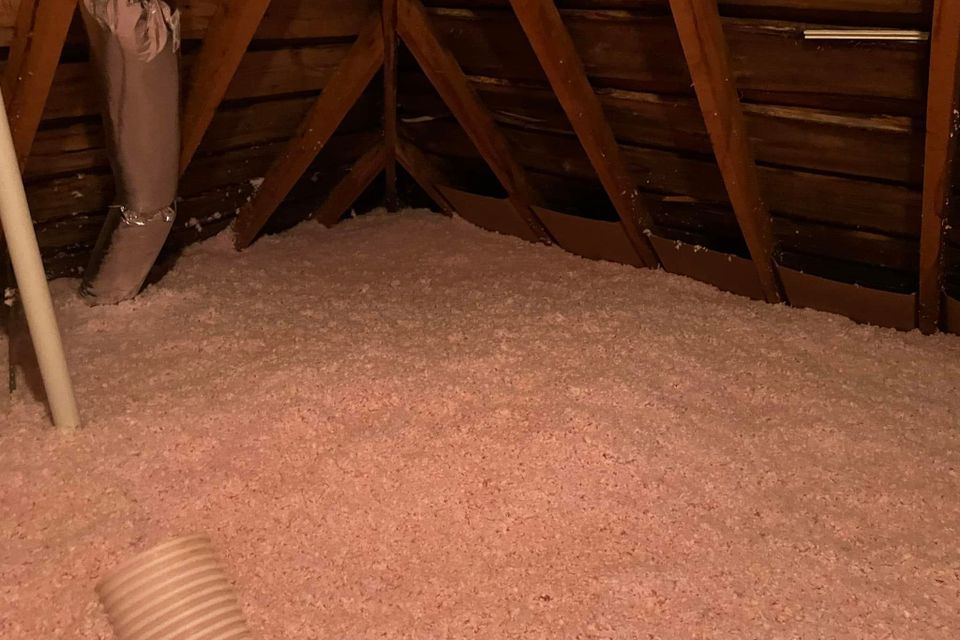
Blown in Over Spray Foam
Many times we will blow Fiberglass over a smaller layer of Spray Foam. This will give you a better seal with the Spray Foam and a better R-Value with the Blown in over the top. This procedure is newer to the industry and is approved for Fire Safety and required R-Value in your home.
Blown-in fiberglass insulation uses loose fibers blown by machine to fill attics, walls, and cavities, offering excellent thermal resistance, sound dampening, and fire resistance, while easily conforming to irregular spaces for high R-values, though proper air sealing and PPE are crucial to avoid skin/lung irritation from fibers. It's a popular choice for upgrading existing insulation or new construction, often chosen for its non-combustible nature and longevity.
Blown-in cellulose insulation is an eco-friendly, recycled paper-based insulation treated for fire, pest, and mold resistance, installed by blowing loose fibers into attics, walls, or floors for superior thermal performance, air sealing, and sound dampening, often achieving high R-values (R-3.8/inch) and reducing energy costs. It's a green choice made from newspaper/cardboard, installed dry in attics or dense-packed/damp-sprayed in walls, creating a seamless, draft-free barrier with lower embodied energy than fiberglass
Blown-in fiberglass insulation uses loose fibers blown by machine to fill attics, walls, and cavities, offering excellent thermal resistance, sound dampening, and fire resistance, while easily conforming to irregular spaces for high R-values, though proper air sealing and PPE are crucial to avoid skin/lung irritation from fibers. It's a popular choice for upgrading existing insulation or new construction, often chosen for its non-combustible nature and longevity.
Blown-in cellulose insulation is an eco-friendly, recycled paper-based insulation treated for fire, pest, and mold resistance, installed by blowing loose fibers into attics, walls, or floors for superior thermal performance, air sealing, and sound dampening, often achieving high R-values (R-3.8/inch) and reducing energy costs. It's a green choice made from newspaper/cardboard, installed dry in attics or dense-packed/damp-sprayed in walls, creating a seamless, draft-free barrier with lower embodied energy than fiberglass